

- Home
- Services
- Media blasting
Media blasting in Red Deer
We run two heated, indoor blast rooms, so we blast all year, in any weather. Steel grit and shot for steel. Garnet for aluminum and other non-ferrous metals.
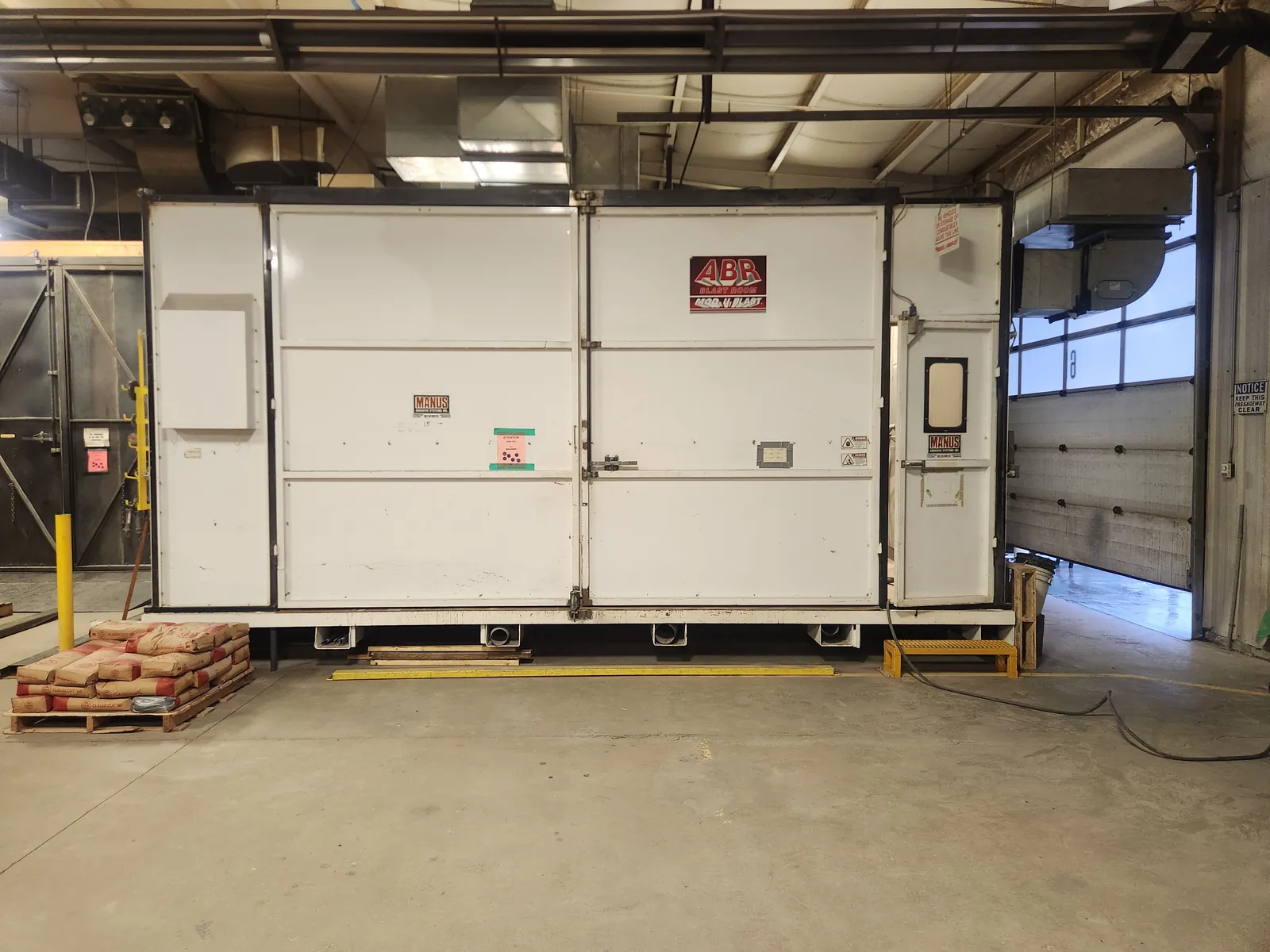
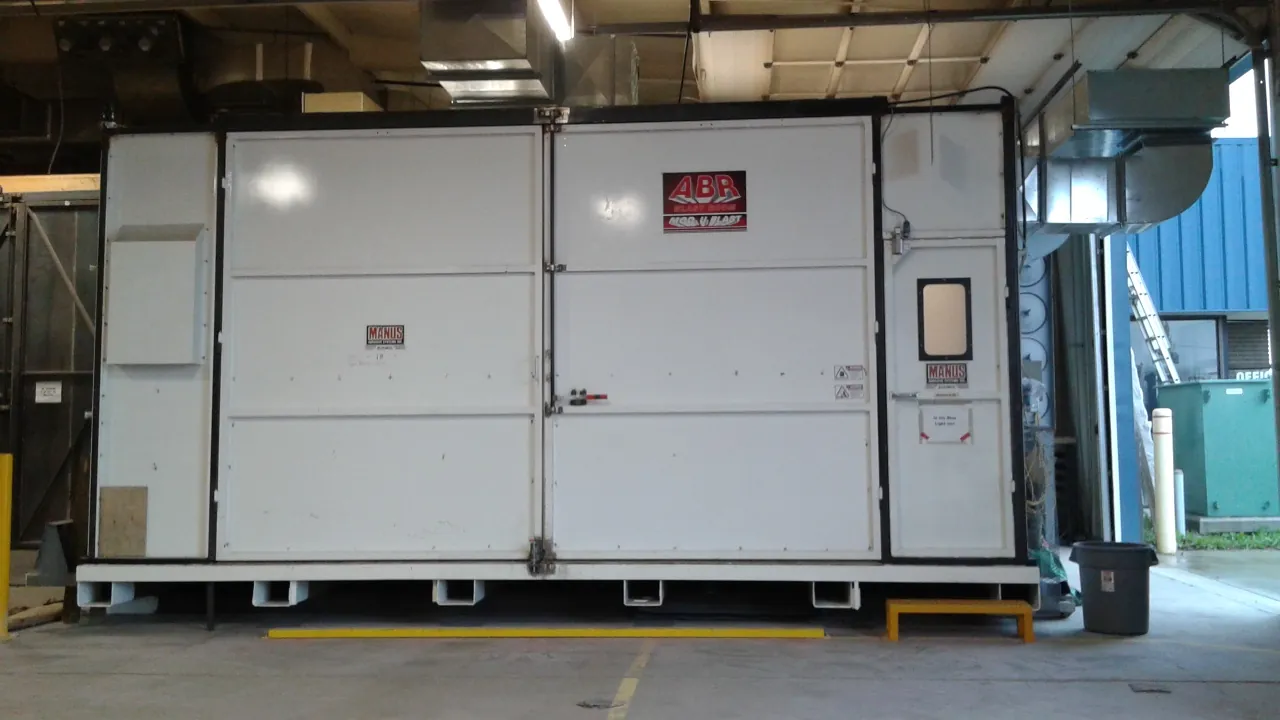
- 30 ftlarge blast room length, 20 ft wide and 15 ft high
- 20 ftsecond room length, 12 ft wide and 8 ft high
- 50 HPlead compressor, with a 75 HP variable drive lag compressor and a 60 HP backup
Two rooms, kept apart on purpose
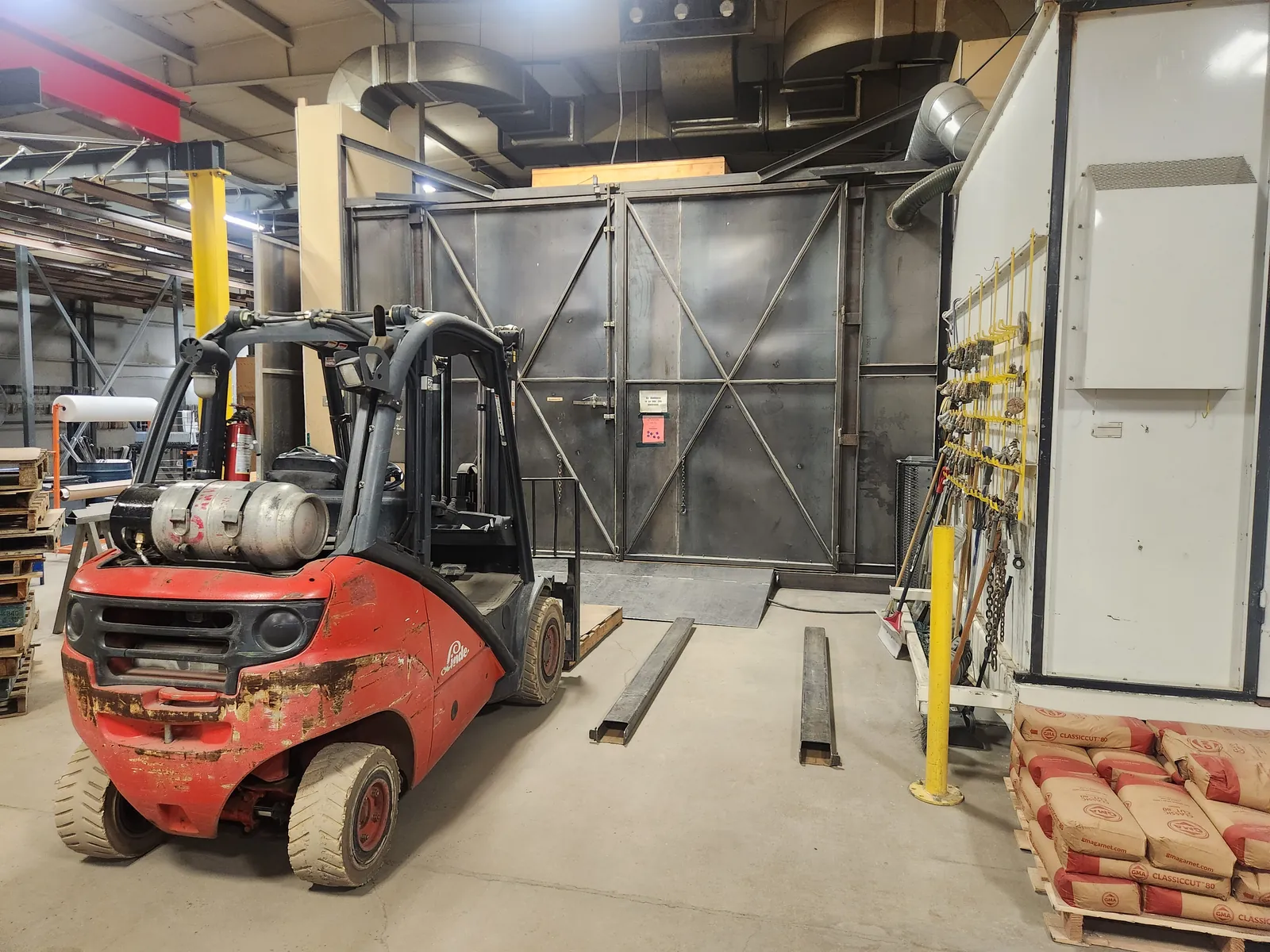
The large room is 30 feet long, 20 feet wide and 15 feet high and runs steel grit and shot. That is where ferrous parts go: heavy steel, mill scale and thick old coatings.
The second room is 20 by 12 by 8 feet and runs garnet, which we keep for non-ferrous parts such as aluminum. Keeping the media separate means steel dust never ends up in an aluminum part, where it would start corrosion.
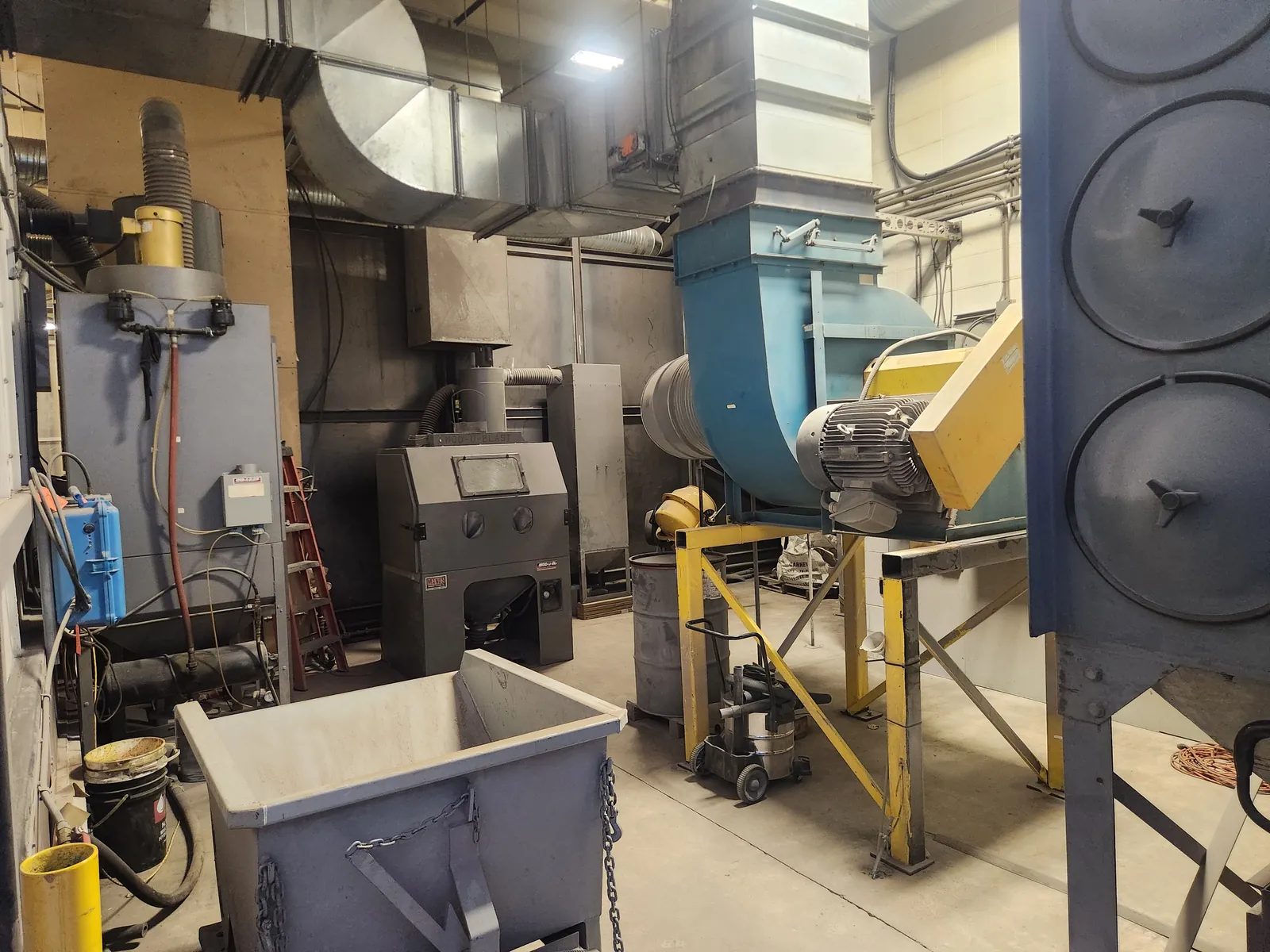
We reclaim and reuse all of our blast media, and dust is collected. That is why parts have to come in free of grease and oil: one contaminated part ruins the whole batch of media, and replacing it costs thousands of dollars.
What we blast
Any metal part that fits the rooms. Steel and other ferrous metals go in the large room, aluminum and other non-ferrous metals in the second room.
Weather is never a factor
A lot of media blasting is done outside, with big pieces blasted in tents. In the cold, blast pots freeze up from moisture in the air, operators need more breaks, and when it gets cold enough the work stops. Our rooms are indoors and heated, so we blast all year and nothing slows down.
Which media for which job
The media is picked for the metal and for the finish your coating needs underneath it.
Steel grit and shot
For ferrous parts. Cuts through mill scale, heavy rust and thick old coatings and leaves a profile that powder and paint grip.
Garnet
For non-ferrous parts such as aluminum. Cleans without leaving steel behind in the surface.
Aluminum oxide
A 48 by 48 inch cabinet for smaller, delicate parts.
How a blasting job runs
Look it over
We check the metal, what is on it now and the surface grade your coating calls for.
Blast
In the room that suits the metal, from a brush blast (SSPC-SP7) to white metal (SSPC-SP5).
Check the profile
Blast profile measured with DeFelsko test equipment.
Coat or release
Straight into our powder booth in the same building, or ready for pickup.
Not sure which grade you need? Surface prep standards in plain language.
What drives the price
- Size. Surface area is most of the cost.
- Condition. Light rust comes off fast. Layers of old paint and mill scale do not.
- Media. The metal and the grade decide what we blast with.
- Access. Tight corners and boxed sections take longer.
See the cost guide for what moves the price.
Our blast setup
- 30 ft room. Steel grit and shot for steel and other ferrous metals.
- 20 ft room. Garnet for aluminum and other non-ferrous metals.
- Blast cabinet. Aluminum oxide for smaller, delicate parts.
- Blast only. Need it blasted and nothing else? We do that too.
Blasting questions
Is media blasting the same as sandblasting?
Not quite. Sandblasting uses sand, and we do not blast with sand. We media blast with steel grit, shot and garnet, picked to suit the metal. A lot of people still call any abrasive blasting sandblasting, so if that is the word you searched, this is the service.
Do you blast aluminum?
Yes, with garnet in the second room. We keep it apart from the steel media so steel dust does not start corrosion in your part.
Can I get parts blasted without coating?
Yes. We blast parts for customers who paint or finish them elsewhere.
What blast grade do I need?
Your coating supplier's data sheet names it. We blast from brush blast (SSPC-SP7) to white metal (SSPC-SP5) and can walk you through the difference.