

- Home
- Services
- Powder coating
Powder coating services
Thermoset powder coating for steel and aluminum, cured at 200°C in a 32 foot oven. One part or a production run, with over 100 colours in stock.
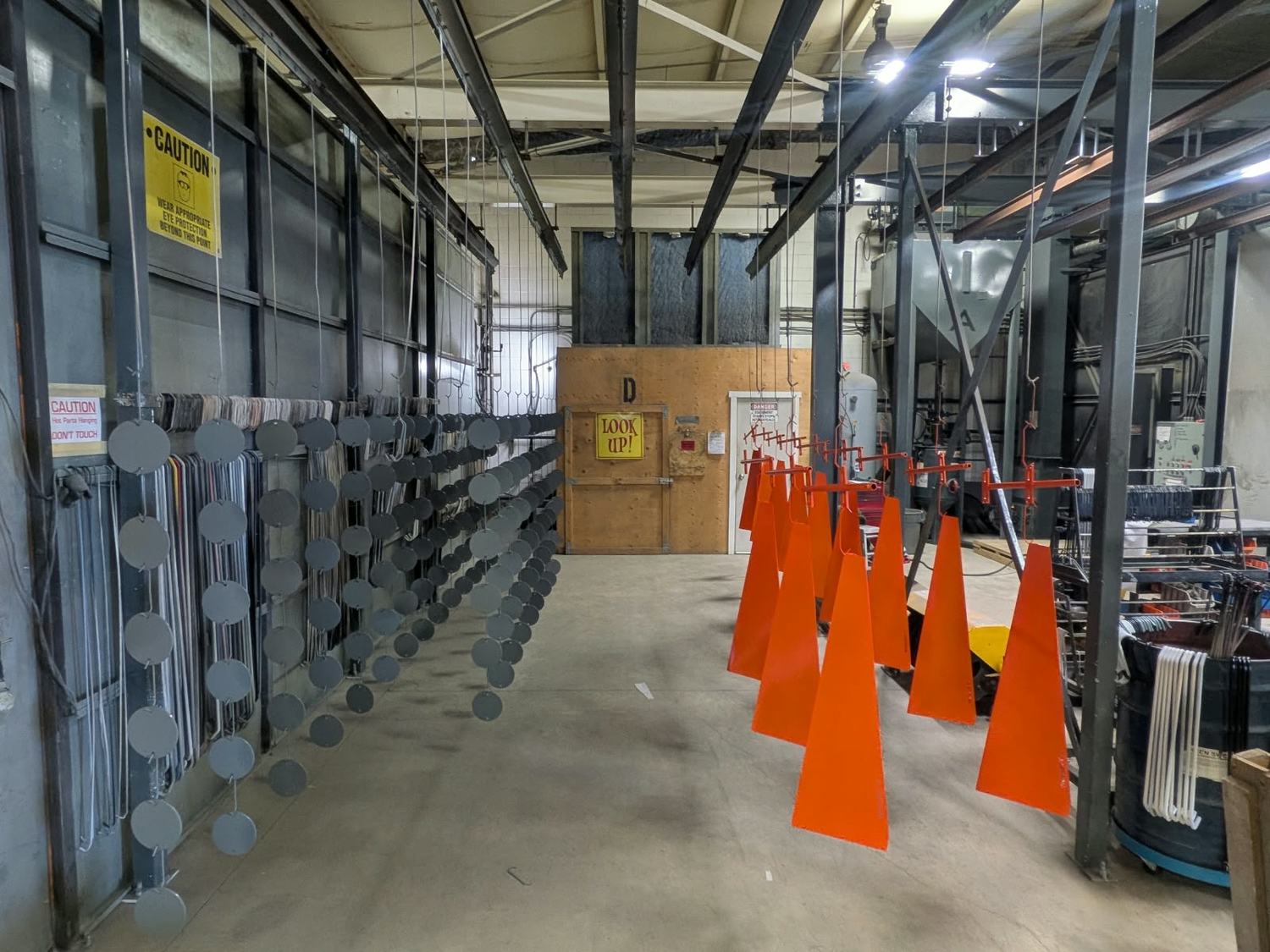
- 32 ftcure oven length, 12 ft wide and 11 ft high
- 15,000 lbper oven load, on five overhead tracks
- 100+colours in stock, thousands more available
- 200°Ccure temperature for a hard, even finish
What powder coating is, in two sentences
Dry powder is sprayed onto clean metal, where a static charge holds it in place. The part then goes into the oven, the powder melts and cures, and what comes out is a hard, even finish that holds up to gravel, road salt and Alberta winters.
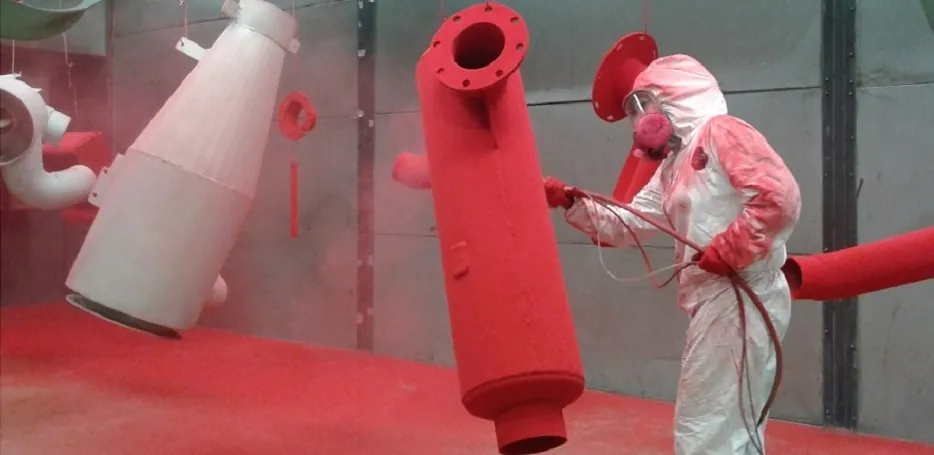
We coat by hand in a booth sized to fit the part plus two coating technicians, so long and awkward pieces get covered from every side.
What we take in
- Fabricated frames and weldments
- Equipment enclosures and skids
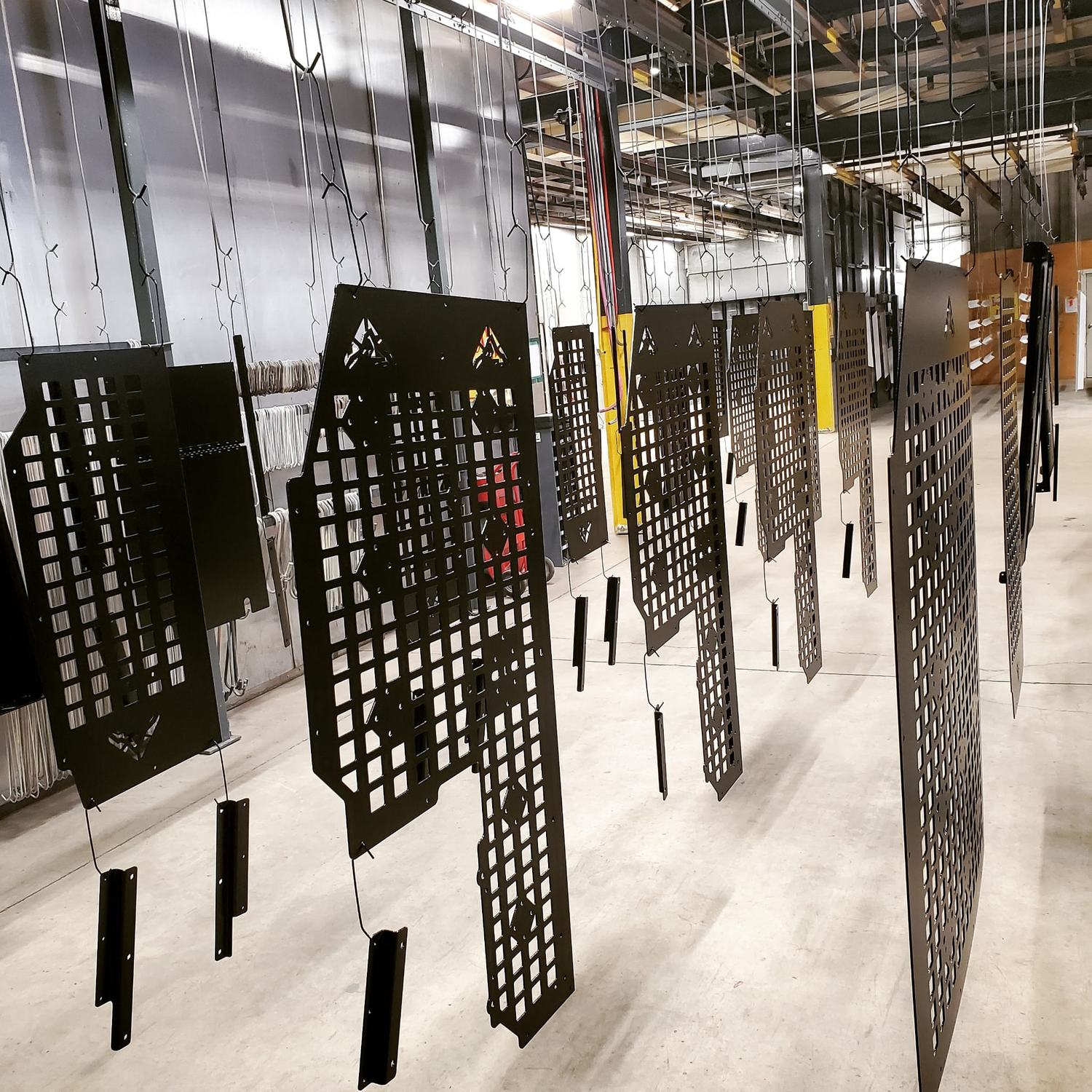
- Laser cut panels and sheet metal
- Railings, gates and fence sections
- Wheels and rims
- Truck decks and trailer parts
New bare metal or old parts with paint and rust. If it needs stripping first, we blast it in the same building.
Three ways to build the finish
Where the part will live decides how many coats it needs. We offer primers, including zinc rich primer, and clear coats.
One coat
A single colour coat over blasted metal. Right for indoor parts and most everyday jobs.
Primer and top coat
A primer under the colour for parts that live outdoors or see road salt and moisture.
Primer, top coat and clear
A clear over the colour for extra depth and protection.
How a coating job runs
Every job starts with a work order. Think of it as the manual for your job. It sets the path each part takes through the shop and tells our technicians what to do at every step: how to prep it for blasting and for coating, how to package it, and the mil thickness and blast depth when your job calls for them. It also records the time spent, for billing.
Blast
Blasted to clean metal in one of our two indoor blast rooms, or in the cabinet for small, delicate parts.
Blow down
Dust and media cleared in a separate blowdown and prep booth.
Powder
Applied by hand in the powder booth, with plugs and high-heat tape masking anything that must stay bare. The part, the booth and the tracks are all grounded, so the powder pulls on evenly.
Cure
Baked at 200°C in the 32 foot oven.
Inspect
Coating thickness checked with DeFelsko test equipment before it is loaded.
Getting the powder to stick
Powder coating is an electrostatic process. The powder is finely ground, with a consistency similar to talc powder, so it is extremely fine. Because of this, it tends to pack down when it is stored in boxes, so we transfer it to powder pots that have a fluidizing system on the bottom. Once fluidized, it flows like water. It literally feels like water at this stage. This is necessary because the powder is then pumped through pickup tubes in the pot and carried pneumatically through a hose to the powder gun. When the gun is triggered, it gives the powder a positive charge as it is sprayed out. We can control the rate of charge, the transfer velocity and more through a control module mounted in the spray booth, where the technician can easily adjust it on the fly.
The part is grounded through the spray booth, which provides a negative charge, so the charged powder is attracted to the part. Opposites attract. This works best with a good ground. Our parts, the booth and the overhead tracks are all grounded back to grounding rods that go below the concrete floor, 10 feet into the ground. These grounds are kept wet, so the grounding stays strong and consistent.
How we keep a good ground
- Clean hooks, every time. Hooks are used once, then cleaned in our 1 MM BTU burn off oven. Cured powder left on a hook acts like an insulator, blocking the +/- electron transfer the process needs.
- Into the corners. A good ground helps ward off Faraday's Cage (Faraday's law), thus allowing powder into tight inside corners, where it would otherwise be repelled and left as bare metal.
- Less waste. A poor ground is like long weekend traffic. The positively charged electrons back up with nowhere to go, less powder sticks, and more ends up on the floor as waste.
What drives the price
- Size. Bigger parts take more powder, more booth time and more oven space.
- Prep. Rust, mill scale and old coatings have to come off first.
- Colour. Stock colours cost less than a custom order.
- Masking. Threads, bores and mating faces that must stay bare take time to cover.
- Quantity. A run of the same part costs less per piece than a one-off.
- Coats. Primer and clear each add a pass through the booth and the oven.
There are too many variables for a price list, so every job gets its own estimate. The cost guide explains what moves the price.
Powder coating questions
Can you powder coat aluminum?
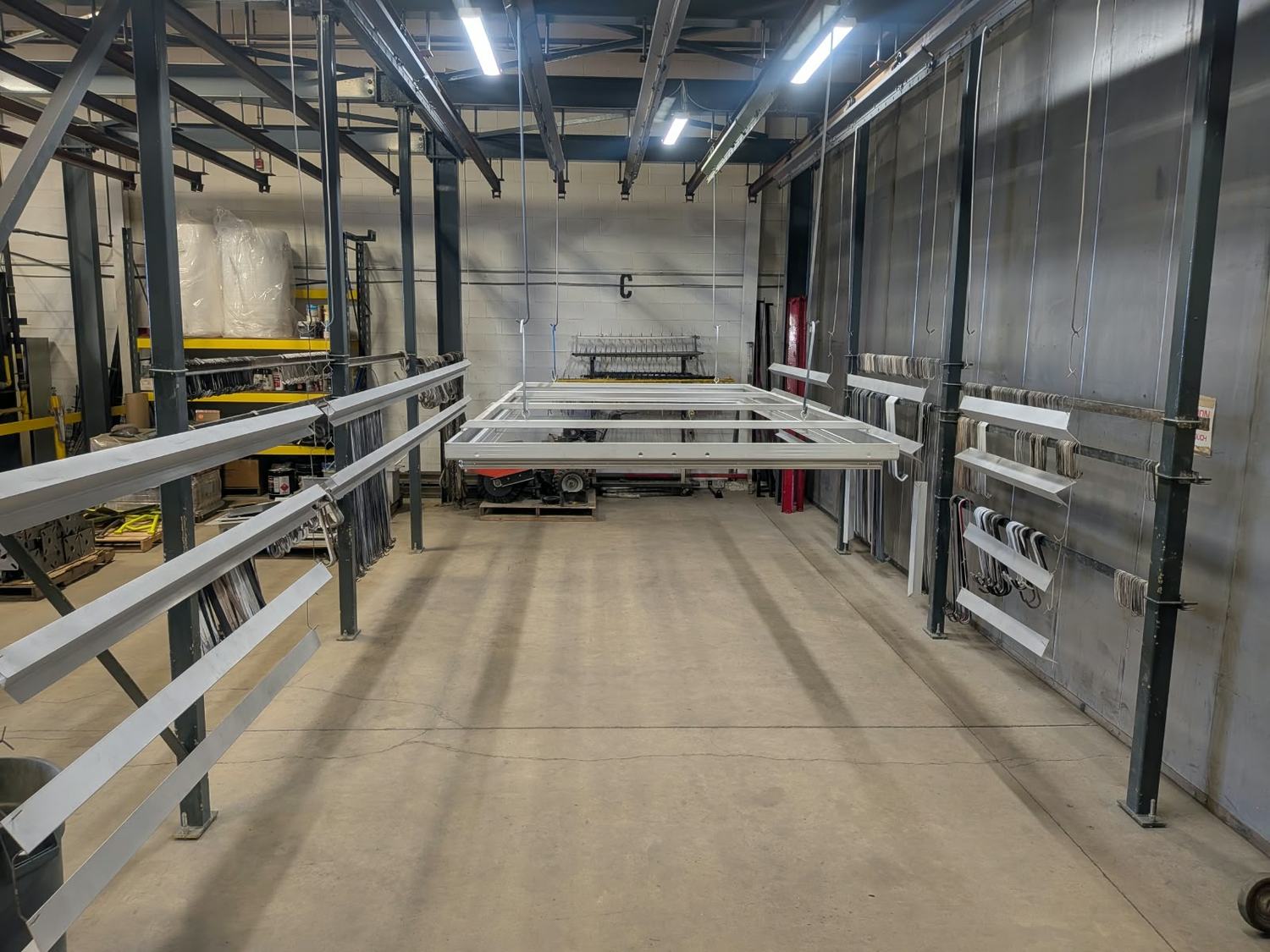
Yes. Aluminum is media blasted with garnet in its own room, so steel dust never touches it. Aluminum gives off oils when it is blasted, so before coating we pre-heat it to burn those oils off. Then it is coated and cured.
How big a part can you coat?
Up to 32 feet long, 12 feet wide and 11 feet high, and up to 15,000 lb per oven load. The shop and equipment page has every number.
What cannot be powder coated?
Wood, plastic and chrome parts. Everything else has to come in ready: free of dirt, grease and oil, with grease nipples, bearings and seals taken off. Fuel tanks must be thoroughly cleaned first, usually by steaming.
Can you match a colour?
We keep over 100 colours in stock, thousands more are available, and we can arrange a custom powder. Tell us the colour you are after and we will walk you through it.
How long does a job take?
It depends on the job. Our lead times run 1 to 2 weeks. Ask us when you call and we will talk it through.